SEO For NDIS Providers Has Changed, And That’s Good News
SEO isn’t what it used to be, and I think that’s a great thing.
First, what I believe SEO is for. It’s there to bring the right people to your website (participants, families and support coordinators) and then, once they’re on it, to help them feel sure enough about you to pick up the phone or fill out your form. Without that, you’re wasting your money.
Google has run four spam updates in 2026 so far. A spam update is Google’s way of weeding out websites that try to game its search results. The latest one took nearly two weeks and only finished in early October. Over those months I’ve seen some NDIS providers slip down the Google search results, and when you slip down Google, families stop finding you and the enquiries dry up.
If that’s you, please don’t panic. The old way of doing SEO is precisely what Google is going after, and if you have real knowledge and real care for the people you support, I think this is good news for you. Let me explain.
The old way of doing SEO is over
SEO just means getting your website found on Google (and other search engines). For years, here’s how it worked for a lot of NDIS providers. An agency would churn out a stack of suburb pages that were all the same page with the suburb name swapped. They’d publish a blog post each month that could sit on any provider’s website in Australia. Nobody read any of it before it was published, because it was only ever there to hit a monthly number.
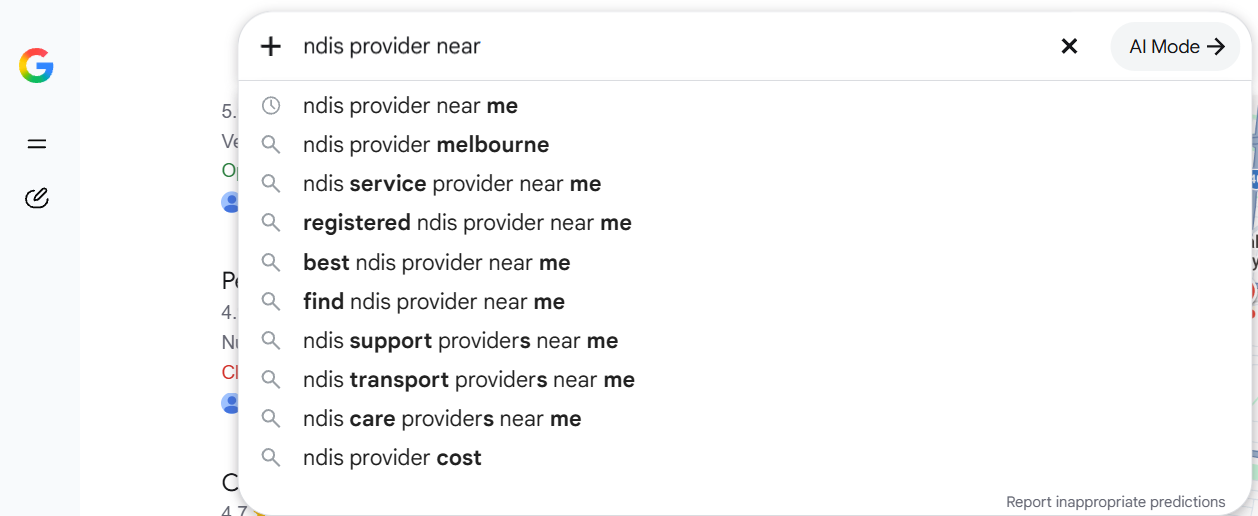
It worked because Google rewarded bulk content targeting the keywords that people searched for. None of those pages gave a family a reason to call, but that was never the point.
I’ve watched providers keep paying SEO firms that fill their sites with pages nobody would ever read, and I’m convinced those pages are doing them more harm than good.
If a page or blog post could be written by an SEO agency without ever talking to the NDIS provider who owns the website, it probably shouldn’t have been written at all. Because that blog post is generic and does nothing to highlight what's special about your business.
What Google is cracking down on
Google now has clear rules against sites stuffed with pages that are only there to get found on Google. Two things in particular are in its sights. The first is a site padded out with lots of pages that don’t help the person reading them. The second is a set of suburb pages that are the same page with another suburb’s name on it, all there to pick up searches and send people to the same place. Google says it doesn’t matter how those pages were made.
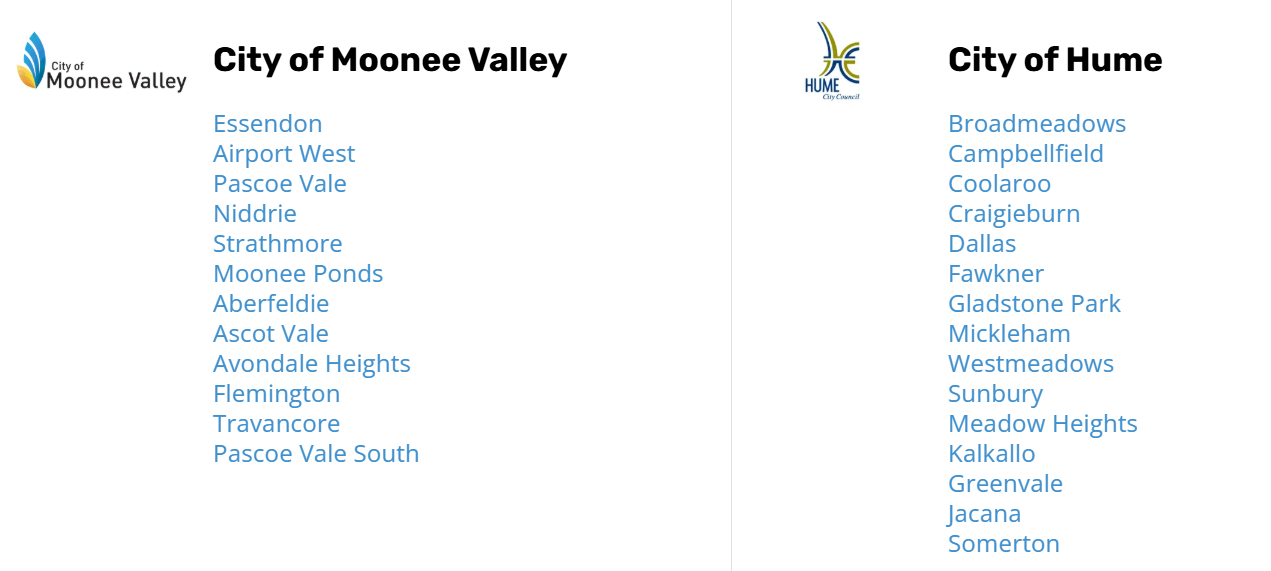
Here’s the part I want you to take in. How useful your content is now counts towards how Google sees your whole site. So if your site is full of thin, generic pages, the whole site can slip down Google's rankings. If Google decides your site is breaking its rules, pages can drop lower or disappear from Google altogether. In practice, families searching for a provider in your area stop seeing you, and the enquiries that used to arrive through your website slow down or stop.
I wrote a plain-English explainer on how Google ranking works if you’d like the basics.
Why generic content stopped working
The way people search has also changed. Many Google searches now start with an AI answer at the top of the page, and tools like ChatGPT answer everyday questions on the spot. Ask what Supported Independent Living is and the answer is right there, so most people never click through to the provider pages that all say the same thing.
A generic page is now competing with every other generic page for a click that mostly isn’t happening anymore.
The pages AI answers quote, and the pages people still visit, are the ones with something you can’t get from a summary: your own knowledge, your local detail and your point of view.
What good content does for you
Good content, and by that I mean content only you (or a marketing agency that is very close to you) could have written, has two jobs:
- It gets you found, because it’s the kind of page Google and ChatGPT want to show.
- When a parent or a support coordinator lands on it, it gives them the confidence and the information to contact you. They can see that you know what you’re doing, that you serve their area, that you get their situation, and what to expect when they call.
A generic page fails at both jobs.
Here’s what we try and incorporate at 2Brownies into the content we write for our NDIS provider client websites:
- Your opinions. What you think good support coordination looks like. Why you keep the same support workers with the same participants.
- Good information. Accurate NDIS detail, with the support categories, the current programs and the Practice Standards right.
- Your stories. Real moments from the work, told with privacy and consent in mind, with names and details changed where they need to be. One honest story tells a family more than a page of pretty words.
- Your expert view. How you prepare a participant for a plan review. What a weekday morning in your SIL homes is like.
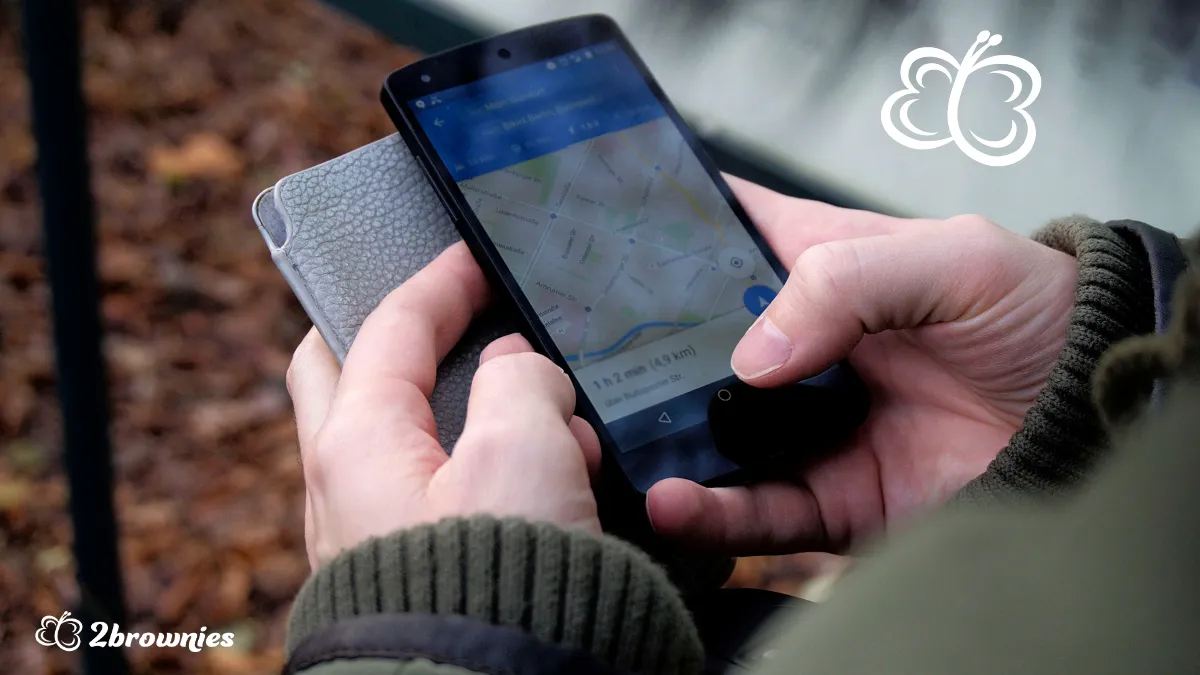
- Suburb pages that are fully unique. The real main road, the station and the bus routes, the Changing Places toilet, the quiet hour at the local supermarket, the clinics you refer to and your own photos.
A suburb page should read like it was written by someone who lives there. If you can swap the suburb name and the rest still fits, it isn’t a local page. It’s a template that's doing you real harm.
Why most general agencies struggle with NDIS SEO
This is where a lot of providers get stuck: their agency works with every kind of business. It writes for a plumber on Monday, a dentist on Tuesday and an NDIS provider on Wednesday, and often nobody on that team knows Core from Capacity Building, or why a support coordinator and a parent want different things from the same page.
When I sit down with a provider, I’m always struck by how much they know that their website never mentions. That knowledge is the best material you have, and it only comes out when someone who understands the sector sits down with you and asks the right questions.
Here’s the problem. When you see a cheap SEO package from a general marketing agency, it's almost certain they don't know the NDIS sector well. There isn’t enough time in those hours for anyone to sit down with you, learn about your service and write proper content for your website. Instead, the agency does the old-fashioned thing by pumping out lots of quick pages and getting loads of low-quality backlinks for your site. Both are now actively harming you and you'd be better off doing nothing.
How we do it at 2Brownies
When we work with a client to get them more leads and more traffic, everything starts with you: our calls, our meetings, the things families ask you every week. We shape all of that into pages and blog posts that sound like you.
Then I read every word, and I rework every piece until I’m happy it’s worth publishing. Nothing goes out unless it's read by me. We never push out AI slop or templated, generic content. Everything is unique, and every location page is researched and written for that suburb and no other.
Let me give you two examples:
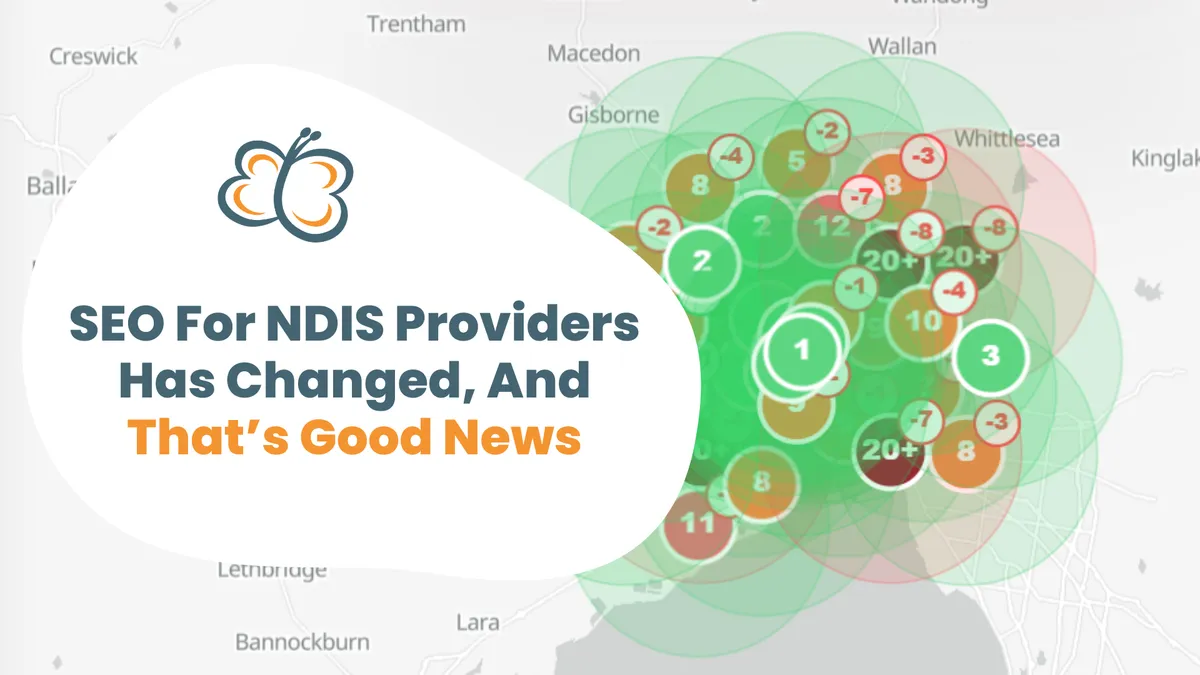
A disability support provider we work with in Melbourne’s west shows up in the top three on Google Maps when people search for a provider or respite in its area. They have 42 five-star Google reviews, which they earned themselves, and their listing on Google Maps was seen 121% more in September 2026 than in September 2025.
Another, a provider in Sydney’s north-west on The Elevate System, has every suburb page written from scratch. I made the map and Street View images myself, and every page is built around that suburb’s own landmarks, shopping centres, transport and accessible facilities. Even though the site only launched recently, their Google listing showed up in 91% more searches in September 2026 than in September 2025. More importantly, more people called them from that listing than in previous months.
The Elevate System
All of this is why I created The Elevate System, a done-for-you monthly marketing system for established NDIS providers. We do what works today, not what used to work last year or even last month. We measure success on how many enquiries came in during the month. Not how many blog posts we wrote or how many hours we spent. And we include activities to get you showing up in AI chats, which is rapidly becoming a source of leads.
It all starts with a 30-minute chat with our client each month. It's where we gather info on all the good work you've been doing, your processes and participant stories. Because we know the sector, I can take what you tell me in that half hour and turn it into content that does several jobs: location-based content, blog posts and social media posts that get you found by the search engines, by real participants and their families. And just as importantly, it will help you get noticed by AI tools like ChatGPT and Gemini, and will give the people on your site who find you a reason to call.
But I designed the Elevate system to go beyond SEO, because in the NDIS, being found on Google is only half of it. The other half is trust.
“In this sector, people choose a provider they trust, and they usually hear about them from someone they trust. Good SEO gets you found. Relationships get you chosen, and a good website is part of building that relationship.”
So every month we also do partner outreach. We find the new support coordinators and allied health providers who’ve set up in your area and draft a warm introduction for you to check and send. That’s how referrals begin.
I’ve capped the Elevate system at ten providers. This kind of work can’t be done at scale, and I’d sooner do it well for ten than badly for fifty.
Five questions to ask your SEO provider
If you have an SEO provider now, ask them these five questions.
- How many enquiries did my website bring in last month?
- Who writes my content, and who checks it before it goes out?
- Are my suburb pages different in substance, or only in the suburb name?
- When did you last ask me what I think about anything on my site?
- What did you change after this year’s spam updates?
A straight answer to all five is a good sign. If your inbox is also full of offers promising you the first page of Google for a tiny fee, my older post on bogus SEO and backlink spammers covers why you should delete them.
The good news
So, what do you need now? If you're paying an SEO company and you're not happy with the results, ask them the five questions above. If they don't answer to your satisfaction, stop paying for their services immediately. They are probably using old-fashioned SEO tactics that could be actively harming you, given Google's latest updates.
The good news is that SEO for NDIS providers now rewards what good providers already have: real knowledge of the work, real care for the people you support and a view on how it should be done. If you feel you're at the point in your business growth where a quality package of marketing services is worth paying for, that's where our Elevate system comes in. That’s what all of this is for: more of the right families finding you, and more of them picking up the phone.
If you’d like to talk it through, book a chat with me or call 1300 608 114. I’ll be honest about whether The Elevate System is a fit for you, and if it isn’t, I’ll say so. And I'll give lots of tips on how to approach your marketing, so you're not left wondering what your next steps should be.